Acupuncture for Carpal Tunnel Syndrome in Boca Raton
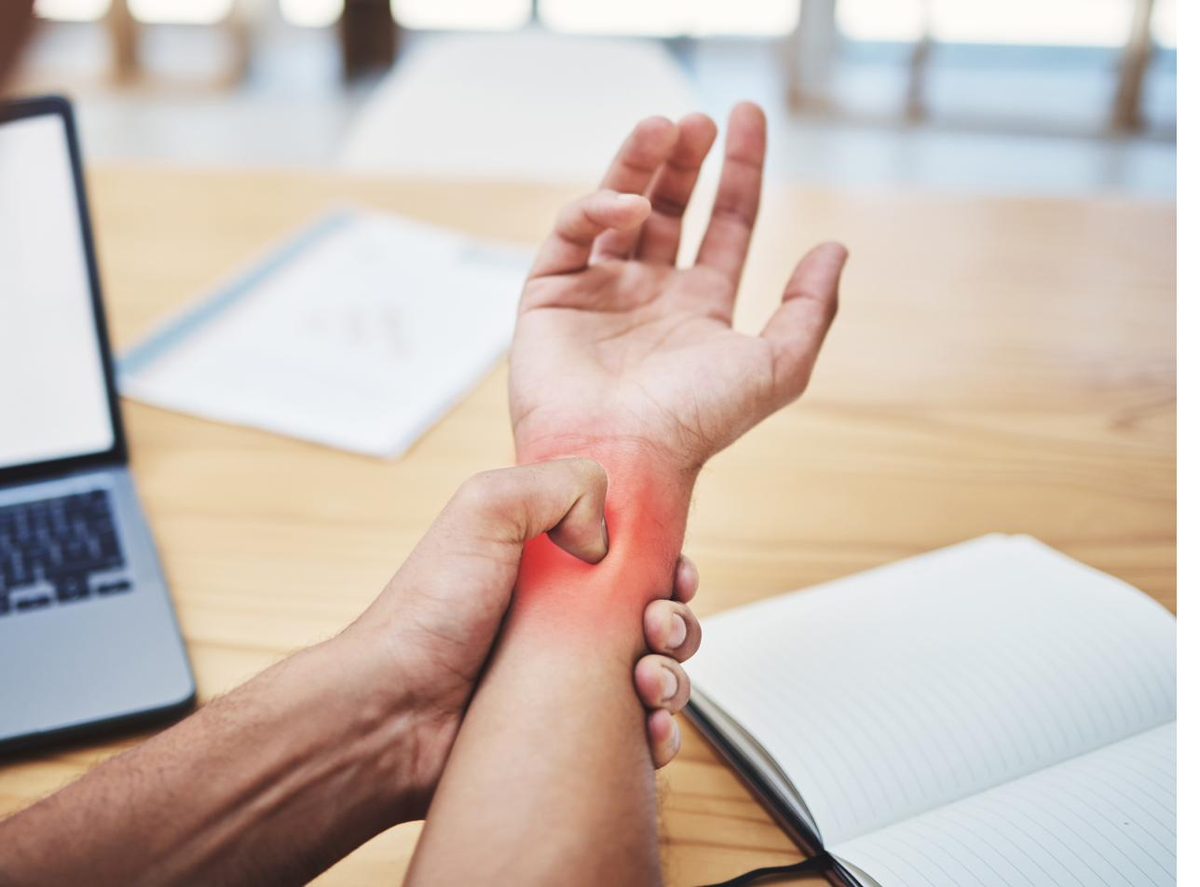
Carpal tunnel syndrome (CTS) is the most common nerve-compression condition, and one that responds particularly well to a conservative, drug-free approach. The numbness, tingling, and night-time wrist pain that define it come from pressure on the median nerve as it passes through a narrow tunnel at the wrist. Many patients arrive considering surgery, hoping first to try something less invasive — and acupuncture is increasingly recognized as a meaningful conservative option. Individual results may vary.
What is carpal tunnel syndrome?
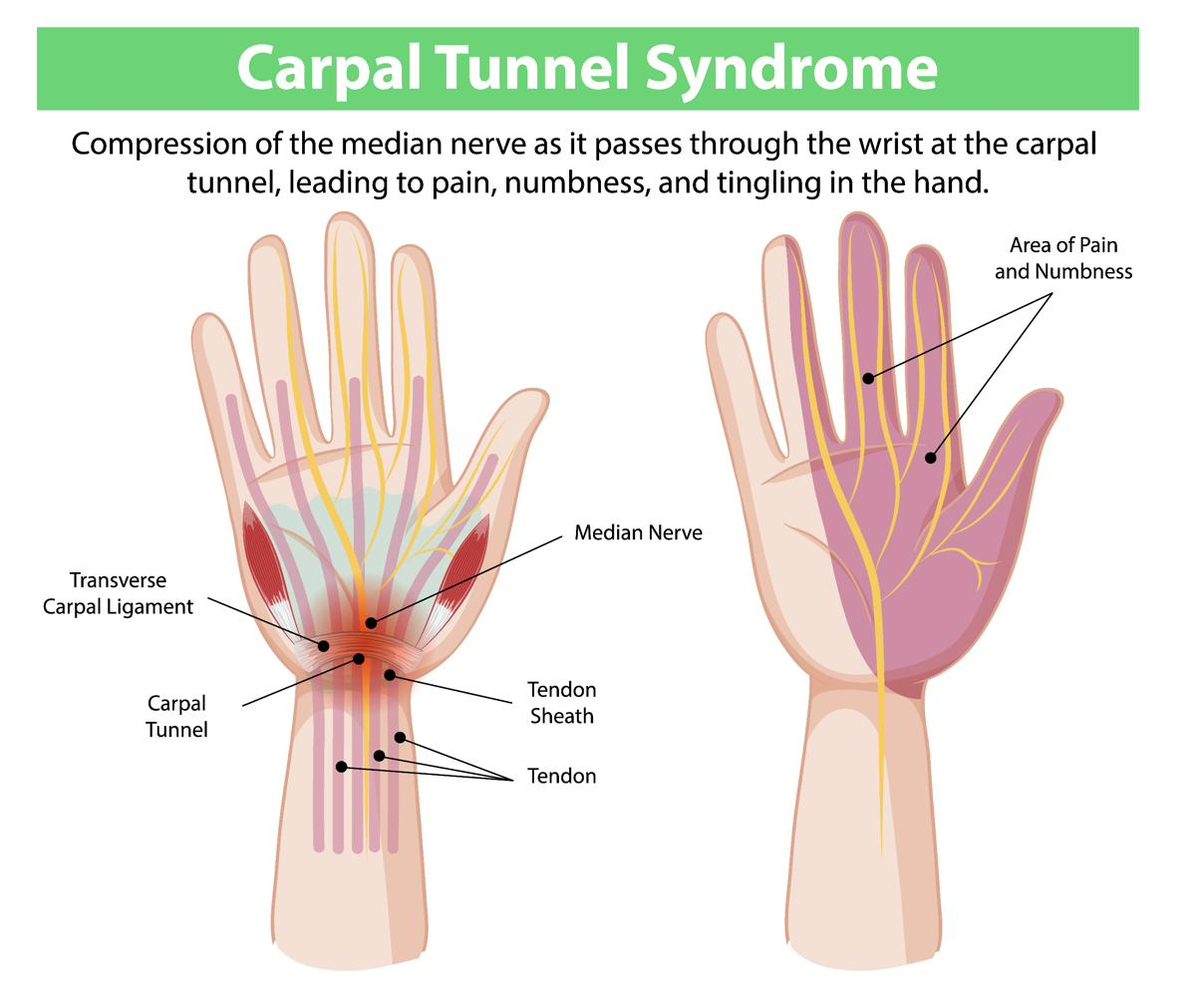
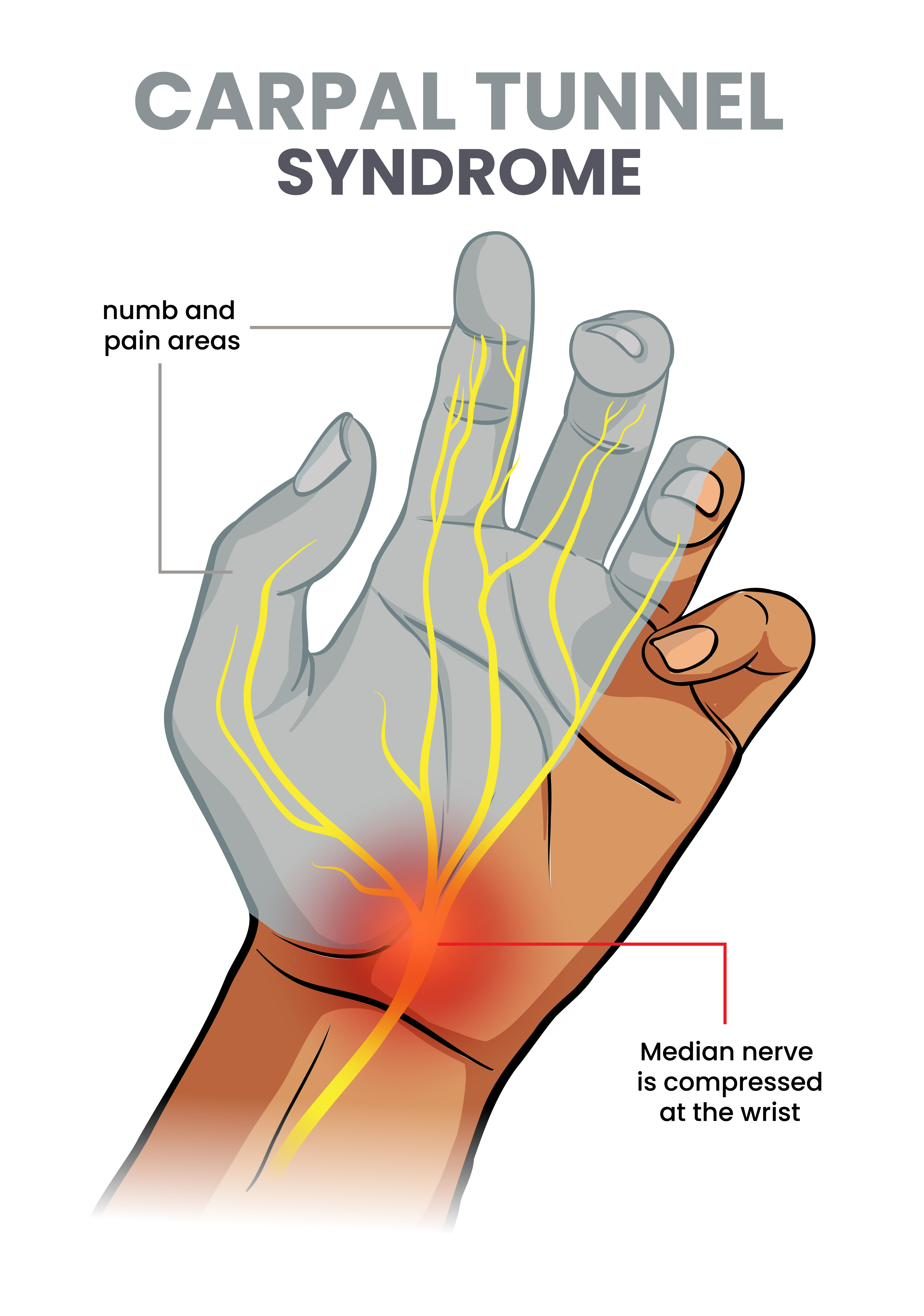
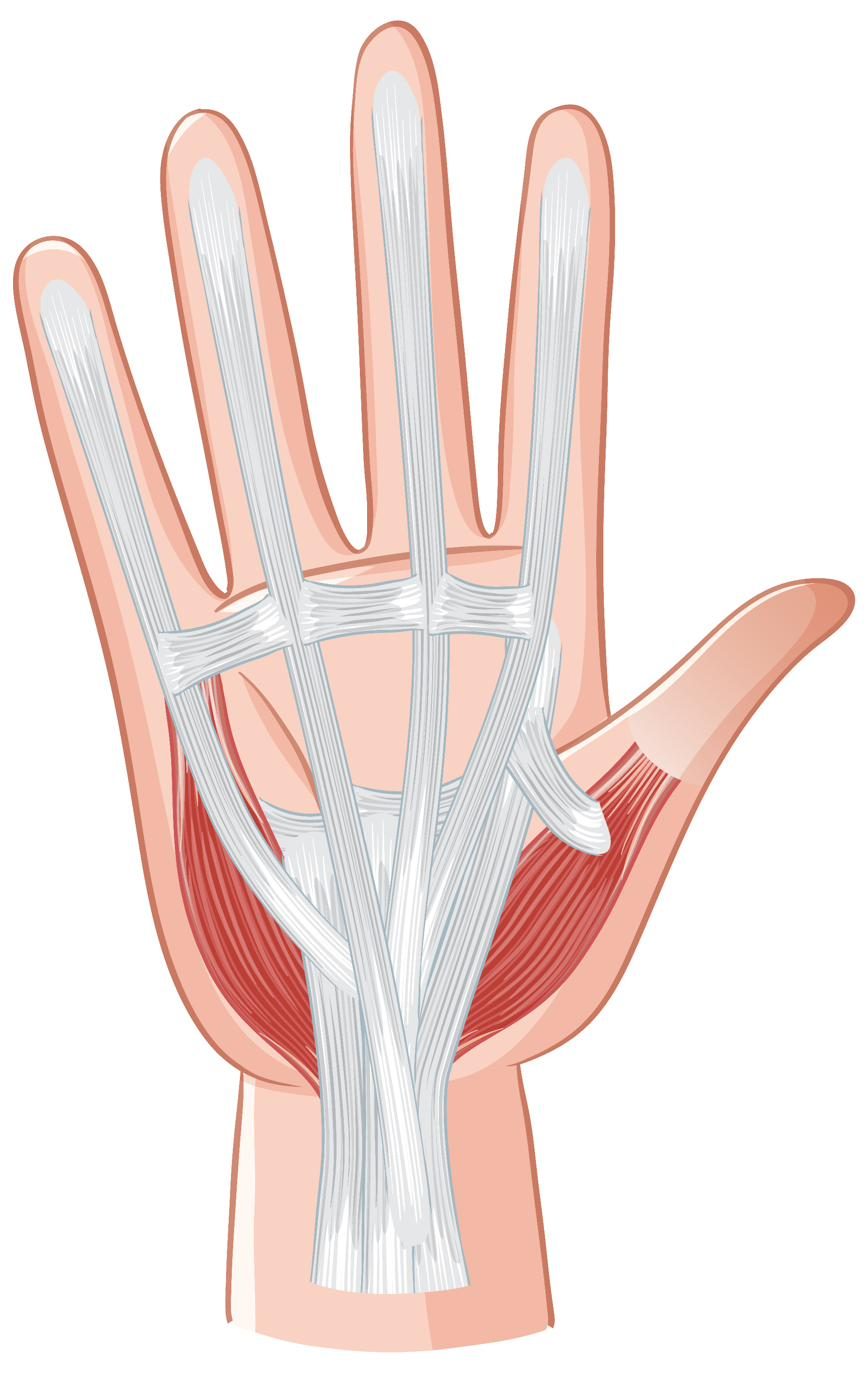
The carpal tunnel is a narrow passageway on the palm side of the wrist. Through it run the flexor tendons that bend the fingers, and the median nerve, which supplies sensation to the thumb, index, middle, and half of the ring finger. When the tunnel narrows or the tendons swell, the median nerve becomes compressed — producing the classic symptoms of CTS.
Common symptoms
Especially the thumb, index, and middle fingers — often worse at night or upon waking, and sometimes relieved by shaking the hand (the "flick sign").
Many patients are woken by burning or aching that radiates from the wrist into the hand, and sometimes up the forearm.
Dropping objects, difficulty with buttons or jar lids, and a weakened pinch grip as the condition progresses.
Common causes & risk factors
CTS usually develops from a combination of factors rather than a single cause:
| Risk factor | How it contributes |
|---|---|
| Repetitive hand & wrist use | Keyboard work, assembly, tools, sustained gripping — irritates and swells the tendons |
| Prolonged computer / device use | Sustained wrist extension raises tunnel pressure (highly relevant for desk workers) |
| Pregnancy | Fluid retention can swell the tunnel; often resolves after delivery |
| Hypothyroidism, diabetes, arthritis | Systemic conditions that promote swelling or nerve sensitivity |
| Wrist anatomy & prior injury | A naturally narrow tunnel, or a previous wrist fracture, increases risk |
How acupuncture may help
Research suggests acupuncture may help carpal tunnel syndrome through several mechanisms:
| Benefit | Mechanism |
|---|---|
| Reduced nerve irritation | May calm sensitization of the median nerve and the brain regions that process its signals |
| Decreased local inflammation | May reduce swelling of the tendons and tissue within the tunnel |
| Improved circulation | Better local blood flow supports nerve health and tissue recovery |
| Pain relief | Endorphin release and modulation of pain-signaling pathways |
| Electroacupuncture for nerves | Gentle electrical stimulation may offer added benefit for nerve-related conditions |
A 2017 randomized controlled trial published in the journal Brain found that acupuncture improved both symptoms and median-nerve function in carpal tunnel patients, with changes measurable in the nervous system (Maeda Y. et al., Brain, 2017). A 2018 study in the Journal of Acupuncture and Meridian Studies reported acupuncture compared favorably to night splinting for mild-to-moderate CTS. Evidence is encouraging but not conclusive. Individual results may vary.
Our approach — looking beyond the wrist
Treatment uses advanced acupuncture techniques (including the Master Tung and Balance Method systems) alongside classical Traditional Chinese Medicine (TCM). The median nerve does not begin at the wrist — it travels from the neck, down the arm, and into the hand. Rather than focusing only on the point where it hurts, treatment can address the wrist together with the forearm and neck, using distal points (often on the opposite arm, or on the leg that mirrors the arm) to influence the affected wrist with minimal needling of the inflamed area itself.
Because CTS is often linked to neck and forearm tension — and sometimes to nerve irritation higher up the arm — treatment frequently addresses the neck and forearm as well, not just the wrist. Individual results may vary.
What to expect
Treatment is typically recommended twice weekly at first. I use the first 4 sessions as a clinical assessment — most patients notice meaningful change within this period. Once improvement is established, frequency is reduced to weekly, then biweekly, with monthly maintenance as needed, particularly for patients who cannot avoid repetitive hand use at work.
See a physician promptly if you experience: constant (not intermittent) numbness, visible wasting of the muscle at the base of the thumb, significant hand weakness, or symptoms following a wrist injury. These can indicate advanced nerve compression that may need surgical evaluation. Acupuncture is best suited to mild-to-moderate CTS and works well alongside medical care.
Frequently Asked Questions
I use the first 4 sessions as a clinical assessment — most patients notice meaningful change within this period. Mild-to-moderate CTS typically responds within 8–12 sessions. Results tend to last longer when repetitive strain is also addressed (ergonomics, breaks, wrist position). Severe or long-standing cases with muscle wasting are less predictable and may need medical evaluation.
For mild-to-moderate carpal tunnel, many patients are able to manage symptoms conservatively and postpone or avoid surgery — and research supports acupuncture as one such conservative option. For severe compression with constant numbness or muscle wasting, surgery may be the more appropriate path, and we'll always be honest with you about that. Individual results may vary.
They aren't mutually exclusive — many patients do both. A night splint keeps the wrist in a neutral position to reduce pressure while you sleep; acupuncture may address the underlying inflammation and nerve irritation. At least one study has found acupuncture comparable to splinting for mild-to-moderate CTS. Keep using your splint unless your physician advises otherwise.
Usually not as the main focus. Using advanced acupuncture techniques, much of the treatment uses distal points on the opposite arm or the leg that mirrors the arm. When local points are used, the needles are very fine and placed gently.
Pregnancy-related CTS is common due to fluid retention and often resolves after delivery. Acupuncture may help a great deal with carpal tunnel syndrome in pregnancy, using points that are appropriate during pregnancy, while we coordinate care carefully for pregnant patients.
We are a self-pay practice and do not bill insurance directly. Upon request, we can provide a superbill — an itemized receipt with the codes insurers require — which you may submit to your insurance company for possible out-of-network reimbursement, depending on your plan. Acupuncture is also an eligible expense for most HSA and FSA accounts. Contact us with questions.
Related Conditions & Services
Sources: American Academy of Orthopaedic Surgeons (AAOS) — CTS prevalence; National Institute of Neurological Disorders and Stroke (NINDS/NIH) — demographics and risk factors; Maeda Y. et al., "Rewiring the primary somatosensory cortex in carpal tunnel syndrome with acupuncture," Brain, 2017; comparative study of acupuncture vs. night splinting for mild-to-moderate CTS, Journal of Acupuncture and Meridian Studies, 2018.