
Acupuncture for Acid Reflux & Heartburn (GERD)
If heartburn, regurgitation, or that burning rise of acid into the chest and throat keeps interrupting your meals and your sleep, you may be looking for options beyond a daily pill. Acupuncture is increasingly studied as a complementary approach for acid reflux and GERD (gastroesophageal reflux disease), used alongside the care of your physician rather than as a replacement for it. Many...
What is acid reflux & GERD?
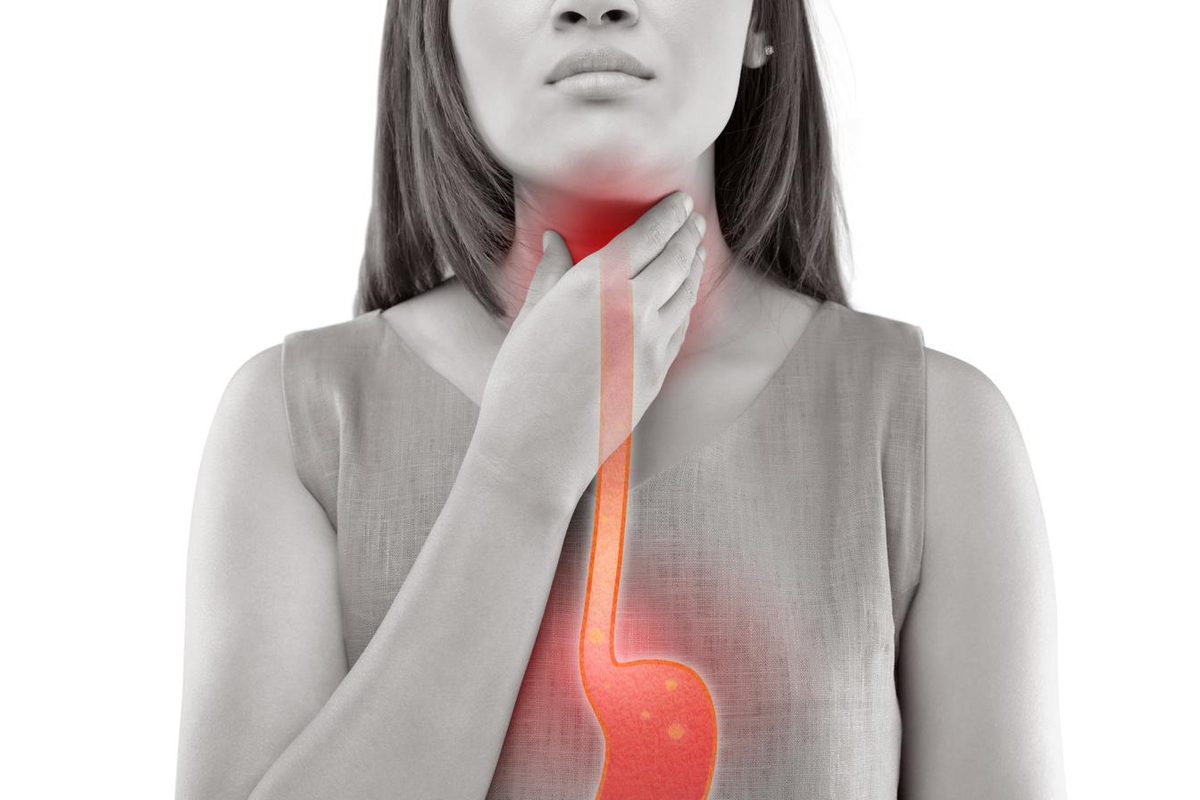
At the bottom of the esophagus sits a ring of muscle called the lower esophageal sphincter (LES). Normally it closes after food passes through, keeping stomach acid where it belongs. When the LES relaxes at the wrong time or weakens, acid can flow back up into the esophagus — that backwash is reflux, and the burning feeling it causes is heartburn. When reflux happens often (generally two or more times a week) or starts to irritate the esophagus, it is usually called GERD.
Common triggers & risk factors
| Trigger | How it contributes |
|---|---|
| Large or late meals | Eating a lot, or lying down soon after eating, makes reflux more likely |
| Pressure on the stomach | Excess weight around the abdomen, tight clothing, and pregnancy push acid upward — we cover reflux during pregnancy on a dedicated page |
| Stress & the nervous system | Stress can heighten how reflux is perceived and slow digestion — our stress & anxiety page goes deeper |
| Trigger foods & drinks | Commonly fatty or fried food, coffee, chocolate, citrus, tomato, mint, alcohol, and carbonated drinks |
| Other contributors | Smoking, hiatal hernia, certain medications, and overlapping gut conditions such as IBS and other digestive issues |
Common symptoms
Burning behind the breastbone (heartburn), sour or bitter regurgitation, and discomfort that's worse after meals or when lying down.
Chronic cough, hoarseness, frequent throat-clearing, a lump-in-the-throat feeling, sore throat, or disrupted sleep — these can appear without classic heartburn.
How acupuncture may help
Research suggests acupuncture may help reflux through several mechanisms. We frame these as what research suggests, not as guarantees:
| Mechanism | What it may do |
|---|---|
| Lower esophageal sphincter tone | A randomized trial using esophageal manometry found acupuncture was associated with increased LES length and resting pressure — the valve that holds acid back |
| Esophageal motility | The same trial recorded fewer ineffective contractions, meaning the esophagus cleared more efficiently |
| Calming the nervous system | Acupuncture may shift the body toward parasympathetic ("rest-and-digest") activity, easing the stress component that often worsens reflux |
| Symptom perception | Patients in add-on acupuncture studies reported lower daytime and night-time heartburn and regurgitation scores |
In a randomized trial of 30 patients whose heartburn persisted on a standard proton-pump-inhibitor (PPI) dose, adding acupuncture twice a week for four weeks reduced daytime heartburn more than doubling the medication dose, and night-time heartburn and regurgitation improved only in the acupuncture group (Dickman R, et al., Aliment Pharmacol Ther, 2007;26:1333–1344). A separate randomized trial in 68 patients used esophageal manometry and found acupuncture improved LES length and pressure with significantly lower GerdQ symptom scores (Yao W, et al., Gastroenterology Research and Practice, 2023;2023:4645715). A systematic review and meta-analysis concluded acupuncture may be a useful addition for GERD while calling for larger, higher-quality trials (Zhu J, et al., Acupuncture in Medicine, 2017;35:316–323). These studies frame acupuncture as a complementary, add-on option. Evidence is encouraging but not conclusive. Individual results may vary.
Our approach
Treatment draws on advanced acupuncture techniques and classical Traditional Chinese Medicine (TCM), with points selected throughout the body — including distal points away from the abdomen — and tailored to each individual patient. Because stress and digestion are so closely linked, treatment often addresses the stress side as well, and we always position acupuncture alongside your medical care, not instead of it. Individual results may vary.
What to expect
Treatment is individualized. During the first four sessions we'll see whether your body is responding — and from there we set the treatment plan and number of sessions, which varies from patient to patient depending on how long reflux has been present and how quickly things progress. Visits typically begin twice weekly, then space out to once weekly, biweekly, and occasional monthly maintenance for those who want to hold their gains.
Acupuncture is for comfort and complementary support — not a substitute for medical evaluation. See a physician or gastroenterologist promptly if you have difficulty or pain when swallowing or food feeling stuck, unexplained weight loss, vomiting of blood or black/tarry stools, or persistent symptoms despite treatment (or new symptoms after age 50). Chest pain or pressure — especially with shortness of breath, sweating, or pain spreading to the arm or jaw — can signal a heart problem: call 911.
Everyday habits that may ease reflux
- Eat smaller meals, and avoid eating within about three hours of lying down
- Raise the head of the bed (or use a wedge) rather than stacking pillows
- Notice your personal triggers — often fatty or fried food, coffee, alcohol, chocolate, citrus, tomato, mint, or carbonated drinks
- Avoid tight waistbands; where relevant, gradual weight loss reduces pressure on the stomach
- Limit smoking and late-night snacking; sip rather than gulp during meals
General educational suggestions, not personalized medical or dietary advice — check with your physician about your own situation.
What the research says
Acupuncture for acid reflux and GERD has been studied primarily as an adjunct to proton pump inhibitor (PPI) therapy, with encouraging findings for symptom reduction.
- Adjunct to PPI therapy: A randomized trial (Dickman et al., Gut, 2007) found that adding acupuncture to PPI therapy produced significantly better control of regurgitation and heartburn than doubling the PPI dose alone — a clinically relevant finding suggesting acupuncture addresses mechanisms beyond acid suppression.
- Lower esophageal sphincter tone: Research shows acupuncture at specific points (particularly ST36 and PC6) may influence lower esophageal sphincter tone and reduce transient relaxations — the primary mechanism of acid reflux. (Zou et al., World Journal of Gastroenterology, 2005). Individual results may vary.
- Systematic review: A meta-analysis of 12 RCTs (Zhu et al., Evidence-Based Complementary and Alternative Medicine, 2020) found acupuncture significantly improved GERD symptoms and quality-of-life scores, though most studies were of moderate quality. Individual results may vary.
Acupuncture is a complementary option for GERD. Persistent or severe reflux, or any difficulty swallowing, warrants medical evaluation to rule out structural causes. Individual results may vary.