Acupuncture for Sports Injuries
Whether you're a competitive athlete, a weekend warrior, or someone whose workout finally caught up with them, sports injuries can sideline more than your training. Acupuncture may help ease pain, calm inflammation, and support your body's natural recovery — working alongside your physician, physical therapist, or athletic trainer. Individual results may vary.
Whether you're a competitive athlete, a weekend warrior, or someone whose workout finally caught up with them, sports injuries can sideline more than your training — they affect sleep, mood, and everyday movement. Acupuncture for sports injuries may help ease pain, calm inflammation, and support your body's natural recovery process, working alongside your physician, physical therapist, or athletic trainer.
Important: Suspected fractures, complete tendon or ligament tears, head injuries, and injuries with severe swelling or inability to bear weight need medical evaluation first. Acupuncture is a complementary therapy — it supports your medical care and never replaces diagnosis or emergency treatment.
Common sports injuries we address
- Ankle sprains and ligament strains
- Muscle strains and pulls (hamstring, calf, groin, quadriceps)
- Tennis elbow and golfer's elbow (lateral and medial epicondylitis)
- Runner's knee and patellar tracking pain
- Rotator cuff strain and shoulder pain
- Shin splints
- Plantar fasciitis and Achilles tendonitis
- Lower back strain from lifting or rotation sports
- Delayed-onset muscle soreness (DOMS) and overtraining recovery
- Old injuries that never fully resolved
How Chinese medicine views sports injuries
In Traditional Chinese Medicine, acute injury creates local stagnation of Qi and blood — energy and circulation that become blocked at the site of trauma, producing pain, swelling, and restricted movement. Chronic and recurring injuries often involve an underlying deficiency: tissue that never received the circulation it needed to fully repair. Treatment therefore has two goals: move the stagnation to relieve pain and swelling, and strengthen the underlying terrain so the injury resolves rather than recurs.
| Injury phase | TCM understanding | Treatment focus |
|---|---|---|
| Acute (first days) | Local Qi and blood stagnation; heat and swelling | Gentle distal needling to move stagnation and calm inflammation — often without needling the injured area at all |
| Subacute (recovery) | Stagnation resolving; circulation rebuilding damaged tissue | Restore full circulation, reduce residual stiffness, support tissue repair |
| Chronic / recurring | Lingering stagnation plus underlying deficiency | Resolve the old blockage and tonify the constitution so the area stops giving out |
Our four-method approach
Traditional Chinese Medicine (TCM) — the foundation of treatment. TCM assessment identifies not just the injured tissue but the pattern behind slow healing: circulation, constitutional strength, and contributing factors like poor sleep or chronic stress that impair recovery.
Master Tung's Acupuncture — an advanced distal-point system especially suited to sports injuries: needles are placed on the opposite limb or a mirroring region, which means the injured area itself is never aggravated. This makes treatment possible even when the injury site is swollen, bruised, or too tender to touch.
Auricular acupuncture — the ear contains reflex points for the entire musculoskeletal system. Auricular points support pain relief and can be stimulated with tiny seeds between sessions — useful for athletes managing discomfort during a return-to-play program.
Dr. Tan's Balance Method — based on symmetry and mirroring, this method treats one side of the body to balance the opposite side — for example, needling the healthy ankle to influence the sprained one. It pairs naturally with Master Tung's points for injuries too acute for local needling.
Adjunct modalities: Depending on your injury and phase of healing, treatment may include trigger point (dry) needling for muscular knots, electroacupuncture for stubborn or nerve-related pain, cupping to improve circulation and release tight muscle layers — a method familiar to many competitive athletes — or TDP heat lamp therapy to support blood flow to healing tissue. For pain rooted in specific muscular knots, we may also use trigger-point needling (dry needling) within the same session.
What the research says
Acupuncture's strongest evidence base is in musculoskeletal pain — the category that encompasses most sports injuries. The research ranges from large individual-patient data meta-analyses to condition-specific randomized trials.
- Landmark meta-analysis — chronic musculoskeletal pain: Vickers et al. (Journal of Pain, 2018) analyzed 39 randomized trials with over 20,000 patients and found acupuncture significantly superior to both sham and no-acupuncture for chronic musculoskeletal pain, with effects persisting at 12-month follow-up — the most comprehensive evidence synthesis on this topic to date.
- Clinical guidelines for low back pain: The American College of Physicians recommends non-drug therapies including acupuncture before medication for low back pain — one of the most common sports-related complaints. (Qaseem et al., Annals of Internal Medicine, 2017).
- Tennis elbow (lateral epicondylitis): A systematic review by Trinh et al. (Rheumatology, 2004) found acupuncture produced short-term pain relief for lateral epicondyle pain, though reviewers noted variation in study quality.
- Plantar fasciitis: A randomized controlled trial (Zhang et al., Evidence-Based Complementary and Alternative Medicine, 2021) found acupuncture significantly reduced pain scores and improved foot function in plantar fasciitis compared to sham, with effects maintained at 3-month follow-up.
The evidence is strong for musculoskeletal pain generally and still developing for some specific injuries. We share this honestly: results are not guaranteed for any individual. Always work alongside your physician, physical therapist, or orthopedist for sports injuries requiring imaging or structural evaluation.
What to expect
Initial consultation: We review how the injury happened, what imaging or diagnosis you've received, your training load, and your recovery goals — whether that's returning to competition or simply walking without pain. Bring any reports from your physician, orthopedist, or physical therapist so care can be coordinated.
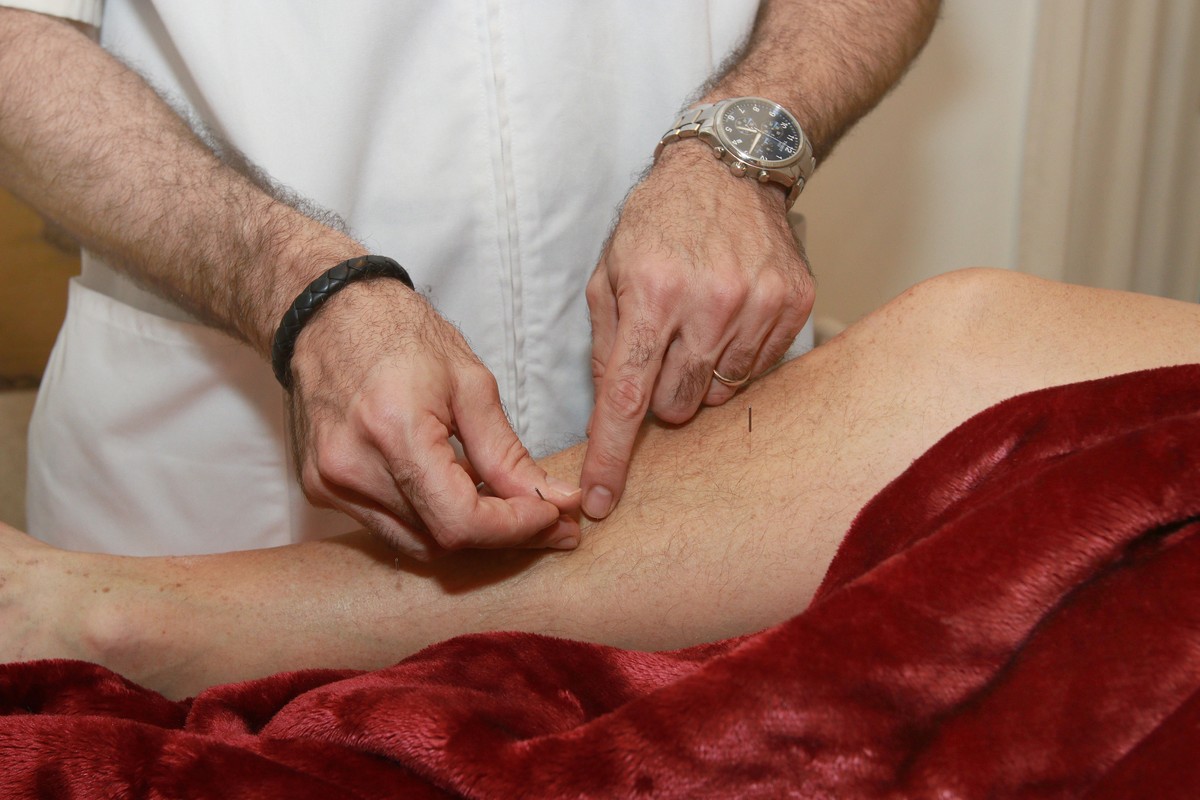
Treatment sessions: Needling for sports injuries is frequently distal — hands, arms, and legs away from the injury — so even a freshly injured area can be treated comfortably. Needles are retained for 40–45 minutes while you rest. Many patients notice a change in pain or range of motion during or shortly after the first session, though a full course is recommended for lasting results.
Frequency: Treatment is typically recommended twice weekly. Acute injuries generally require 6–10 sessions; chronic or recurring injuries may benefit from a longer series. The plan is always set individually based on your response, and adjusted as you return to activity.
Recovery, prevention & performance
Acupuncture fits naturally into a complete recovery program alongside physical therapy, progressive loading, and adequate rest. Many athletes also use maintenance sessions during heavy training blocks to manage soreness, support sleep, and address minor issues before they become injuries. Recovery fundamentals still rule: sleep is when tissue repairs, protein and hydration supply the raw materials, and pacing your return to sport prevents re-injury. Your acupuncturist will offer recommendations tailored to your training and your pattern.
Related conditions & services
Disclaimer: This page is for educational purposes only. Acupuncture may help support recovery from sports injuries, but individual results vary and are not guaranteed. Serious injuries require medical diagnosis and care. Always consult your physician before beginning any new treatment. Acupuncture is a complementary therapy and does not replace conventional medical care, physical therapy, or emergency medicine. Acupuncture needles are FDA-regulated Class II medical devices.