

Acupuncture for Menstrual Pain (Dysmenorrhea)
Painful periods are one of the most common reasons women seek out acupuncture — and one of the most under-treated. Cramping that doubles you over, pain that radiates to the lower back and thighs, nausea, and the dread of the next cycle can quietly reshape work, sleep, and mood. When over-the-counter painkillers or the pill aren't enough, or you'd simply prefer a drug-free option alongside...
What menstrual pain really is
Doctors describe two broad types. Primary dysmenorrhea is cramping pain with no underlying disease — the most common form, usually beginning in the teens or twenties and tending to ease with age. Secondary dysmenorrhea is period pain caused by an identifiable condition such as endometriosis, fibroids, or adenomyosis, and any new, worsening, or unusually severe pain should be evaluated by a physician. Menstrual pain also rarely travels alone: it frequently overlaps with stress and anxiety, poor or broken sleep, migraines and headaches (including hormonal and menstrual migraine), and the changes of menopause as the cycle shifts. It is also closely related to fertility and overall reproductive-cycle health.
Why periods hurt — the prostaglandin mechanism
Common patterns we see
How acupuncture may help
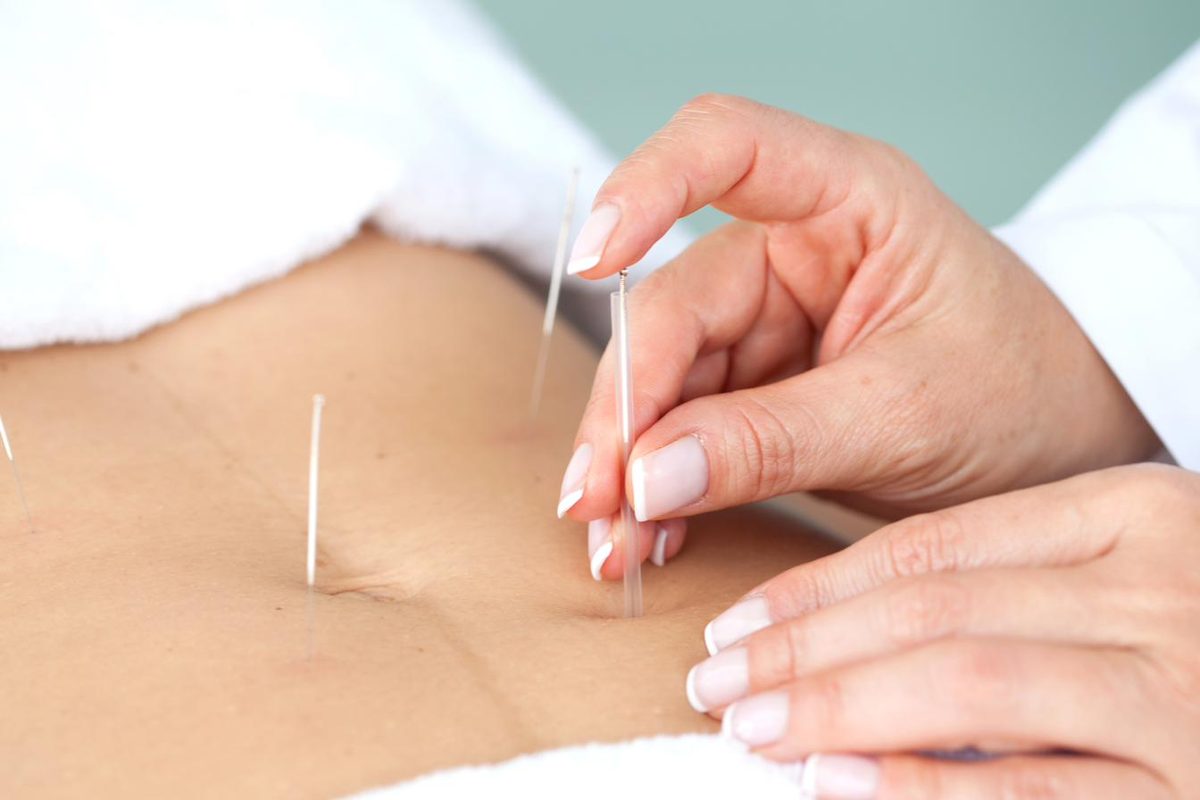
Treatment draws on advanced acupuncture techniques (including the Master Tung and Balance Method systems) alongside classical Traditional Chinese Medicine (TCM). In TCM, painful periods are often understood as a disruption in the smooth flow of Qi and Blood through the lower abdomen — and treatment aims to restore that flow. Sessions frequently use distal points on the lower legs, ankles, and feet (such as SP6, Sanyinjiao), so much of the work is done away from the painful area. Local points on the lower abdomen may also be included at certain phases of the monthly cycle — but generally not during menstruation itself (the bleeding days). For cramps that ease with warmth, a gentle TDP heat lamp may be used over the lower abdomen during the session. Individual results may vary.
| What we aim to influence | How it may relate to period pain |
|---|---|
| Pain signaling | May prompt release of the body's own pain-modulating compounds (such as endorphins), easing cramp intensity. |
| Uterine muscle tension | May help relax the strong, frequent contractions that drive cramping. |
| Pelvic circulation | May support blood flow to the uterus and surrounding tissue during menstruation. |
| Stress & nervous-system balance | May ease the tension and stress that often amplify how pain is felt. |
Pain from endometriosis
Over many years I've worked with women whose period pain stems from endometriosis. In Traditional Chinese Medicine we don't treat only the symptom — we work to address the root imbalance underlying the pain, restoring the smooth flow of Qi and Blood through the lower abdomen. This works alongside, not instead of, the care of your gynecologist, who continues to manage the condition itself. In my clinical experience, this approach can be a valuable complementary tool: a number of patients have reported their pain became significantly more manageable, and in some cases far less intense, alongside their medical care. Individual results may vary.
What the research says
Menstrual pain (primary dysmenorrhea) has a growing evidence base, with recent higher-quality trials supplementing earlier Cochrane findings.
- Cochrane review: Smith et al. (Cochrane Database of Systematic Reviews, 2016) found the available evidence insufficient to draw firm conclusions about acupuncture for dysmenorrhea, due to small study sizes and variable quality — a finding we share honestly.
- More recent meta-analysis: A 2019 meta-analysis in PLOS ONE (Woo et al.) reviewed 60 RCTs and found acupuncture significantly reduced menstrual pain intensity compared to NSAIDs and sham, with the effect strongest for electroacupuncture. The quality of evidence was rated moderate.
- Prostaglandin mechanism: Research shows acupuncture may reduce prostaglandin F2α — the primary mediator of uterine cramping in primary dysmenorrhea — providing a plausible physiological basis for pain relief. Individual results may vary.
Evidence is developing and honest about its limits. Acupuncture is offered here as complementary support based on clinical experience and emerging research, not as a proven cure. Individual results may vary.
Our approach & what to expect
Your first visit includes a full intake — your cycle pattern, pain timing and severity, flow, digestion, stress, and medical history. Because the menstrual cycle runs monthly, change usually isn't visible within the first couple of weeks — so for period pain I generally suggest planning on a course of about ten treatments, followed by maintenance visits tailored to how you're progressing. We don't begin by chasing the period itself: treatment often starts at a point not tied to your cycle, and over the following weeks we gradually adapt the timing to your cycle phase as needed. Some patients begin at once a week, others at twice weekly, then taper to biweekly and a monthly maintenance visit as things settle. The exact number varies from person to person depending on how long the pain has been present and your pace of progress. Individual results may vary.
Acupuncture is complementary and not a substitute for medical evaluation. Please see your physician if your period pain is severe or suddenly worse, if pain occurs outside your period or during sex, if bleeding is very heavy or your cycle changes markedly, or if you have fever, unusual discharge, or difficulty conceiving. These can be signs of conditions such as endometriosis, fibroids, or infection that need specific medical care.
Sources: American Academy of Family Physicians (AAFP) — Primary Dysmenorrhea; American College of Obstetricians and Gynecologists (ACOG) Committee Opinion No. 760: Dysmenorrhea and Endometriosis in the Adolescent; "Diagnosis and Management of Primary Dysmenorrhea," Contemporary OB/GYN; Ju H, Jones M, Mishra G, "The Prevalence and Risk Factors of Dysmenorrhea," Epidemiologic Reviews, 2014;36:104–113; Smith CA, Armour M, Zhu X, Li X, Lu ZY, Song J, "Acupuncture for dysmenorrhoea," Cochrane Database of Systematic Reviews, 2016, Issue 4, Art. No.: CD007854.