Dry Needling in Boca Raton
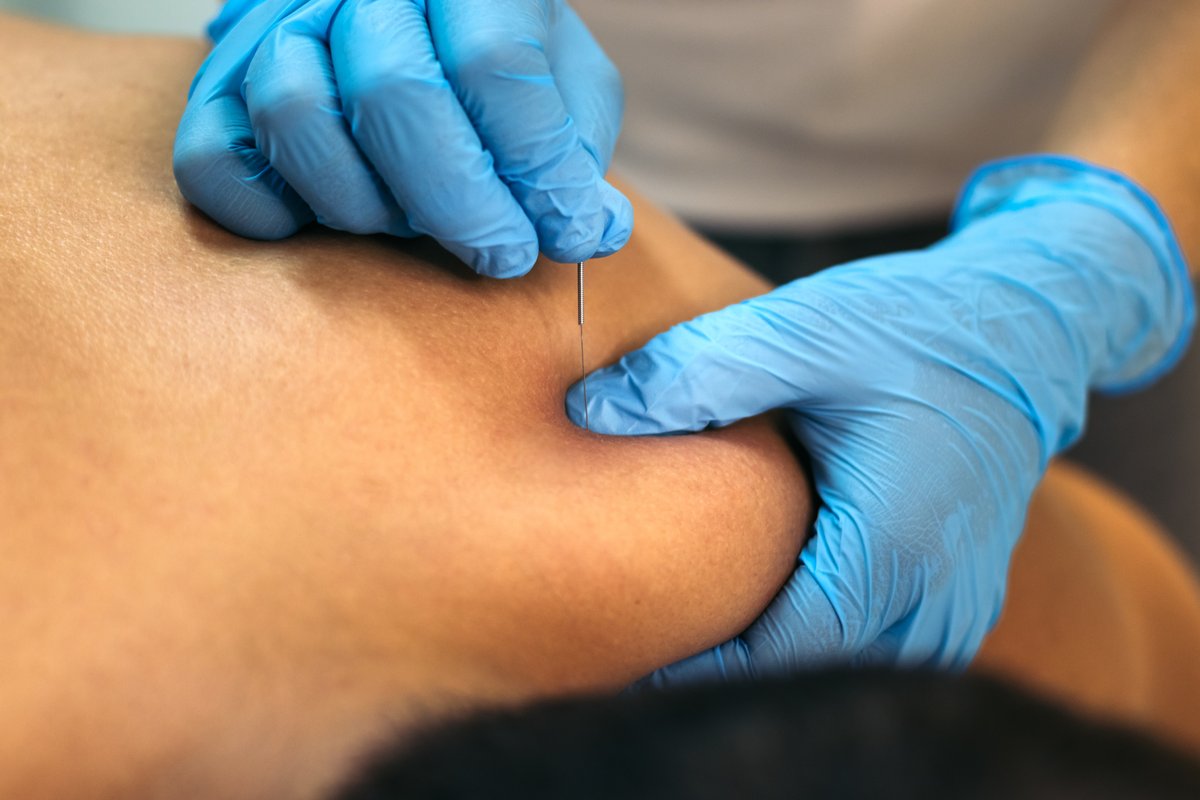
Dry needling is a technique for releasing myofascial trigger points — the tight, tender "knots" that form in overworked muscle and cause local pain, referred pain, stiffness, and restricted movement. A thin, sterile filiform needle (the same needle used in acupuncture; no medication is involved, hence "dry") is inserted directly into the trigger point, prompting the muscle fiber to release, circulation to return, and the pain-tension cycle to reset.
At Rosenblatt Acupuncture, trigger-point needling has been part of Ronen's clinical toolkit for over two decades — one technique within an integrated practice, applied whenever a muscular knot is the true source of the problem.
Dry needling vs. acupuncture — what's actually different?
The honest answer: they use the exact same needles, and trigger-point needling has existed within acupuncture for centuries (classical texts call these tender spots ashi points). The difference is the framework guiding where and why the needles go.
| Dry needling | Classical acupuncture | |
|---|---|---|
| Framework | Western anatomy — muscles, fascia, referred-pain maps | Chinese medicine — patterns, meridians, whole-body diagnosis |
| Target | The trigger point itself, in the affected muscle | Local and distal points chosen for your overall pattern |
| Goal | Release the specific muscle knot | Resolve the pain and the conditions that created it |
| Sensation | A brief muscle twitch or deep ache — momentary, then relief | Usually minimal; light tingling or heaviness |
| Best for | Clearly muscular pain: knots, spasm, overuse tightness | Everything else — and the terrain behind recurring muscle problems |
The advantage of receiving dry needling inside an acupuncture practice is that you don't have to choose. When a knot in the upper trapezius is driving your neck pain, we needle the trigger point directly — and in the same session address the posture, stress, and sleep pattern that keep re-creating it.
What dry needling helps with
- Back pain with muscular knots and spasm
- Neck pain and tension from desk work
- Shoulder pain and rotator cuff tightness
- Tennis elbow and golfer's elbow
- Sports injuries and overtraining tightness
- Plantar fasciitis and calf trigger points
- TMJ and jaw muscle tension
- Tension-type headaches referred from neck and shoulder muscles
What to expect
Trigger-point needling feels different from the rest of an acupuncture session, and it's fair to say so: when the needle finds an active trigger point, the muscle often responds with a brief involuntary twitch — a sign the knot is releasing — sometimes followed by a deep, dull ache for a second or two. Most patients describe it as "strange but satisfying," and the muscle typically feels looser immediately after treatment, though mild next-day soreness — like after a deep massage — is common. Sessions are planned individually; muscular problems often respond within a handful of treatments, and we combine trigger-point work with classical needling in the same visit whenever your pattern calls for it. Individual results may vary.
Frequently Asked Questions About Dry Needling in Boca Raton
Does dry needling hurt more than acupuncture?
Slightly, and honestly: the twitch response and brief deep ache are part of how trigger-point release works, unlike the near-effortless feel of most classical needling. The sensation lasts seconds, and most patients find the after-effect — a looser, quieter muscle — well worth it. If you prefer gentler methods, distal acupuncture can address the same areas more gradually.
Is it safe?
In trained hands, yes. Treatment uses single-use sterile needles and the same clean-needle standards as every acupuncture session. Depth and angle near sensitive structures require anatomical training and experience — one reason to receive trigger-point needling from a practitioner with decades of full-time needling behind them.
Can I combine dry needling with physical therapy or chiropractic care?
Yes — they complement each other well. Releasing trigger points often makes PT exercises and manual work more effective. Tell both providers about each other so your plan stays coordinated.
Do you accept insurance for dry needling?
We are a self-pay practice and do not bill insurance directly. Upon request, we provide superbills for possible out-of-network reimbursement, and treatment is an eligible expense for most HSA, FSA, and HRA accounts.
Disclaimer: This page is for educational purposes only. Dry needling may help ease muscular pain for some patients; individual results vary and are not guaranteed. Always consult your physician regarding any medical condition. Acupuncture needles are FDA-regulated Class II medical devices.