

Acupuncture for Allergies & Hay Fever
Seasonal and environmental allergies affect tens of millions of Americans — turning spring pollen, household dust, or a beloved pet into weeks of sneezing, congestion, and itchy, watery eyes. At Ronen Acupuncture in Boca Raton, acupuncture is offered as a gentle, drug-free complement to your medical care that may help calm the body's overreaction and make your symptoms feel more manageable. It...
What's actually happening in an allergic reaction
An allergy is a case of mistaken identity. Your immune system treats a harmless substance — pollen, dust, animal dander — as if it were a threat. It makes IgE antibodies that trigger cells in your nose, eyes, and airways to release histamine and other chemicals. Histamine is what produces the familiar sneezing, runny nose, congestion, and itchy, watery eyes.
Seasonal allergies (hay fever) flare when tree, grass, or weed pollen — or outdoor mold — is in the air. Perennial (year-round) allergies are usually driven by indoor triggers like dust mites, pet dander, and indoor mold. Allergic congestion often overlaps with the sinus pressure of sinusitis, and for some people the same allergic tendency shows up in the airways as asthma.
Common triggers
Tree, grass & weed pollen — the classic hay-fever triggers.
A leading year-round indoor trigger, especially in bedding.
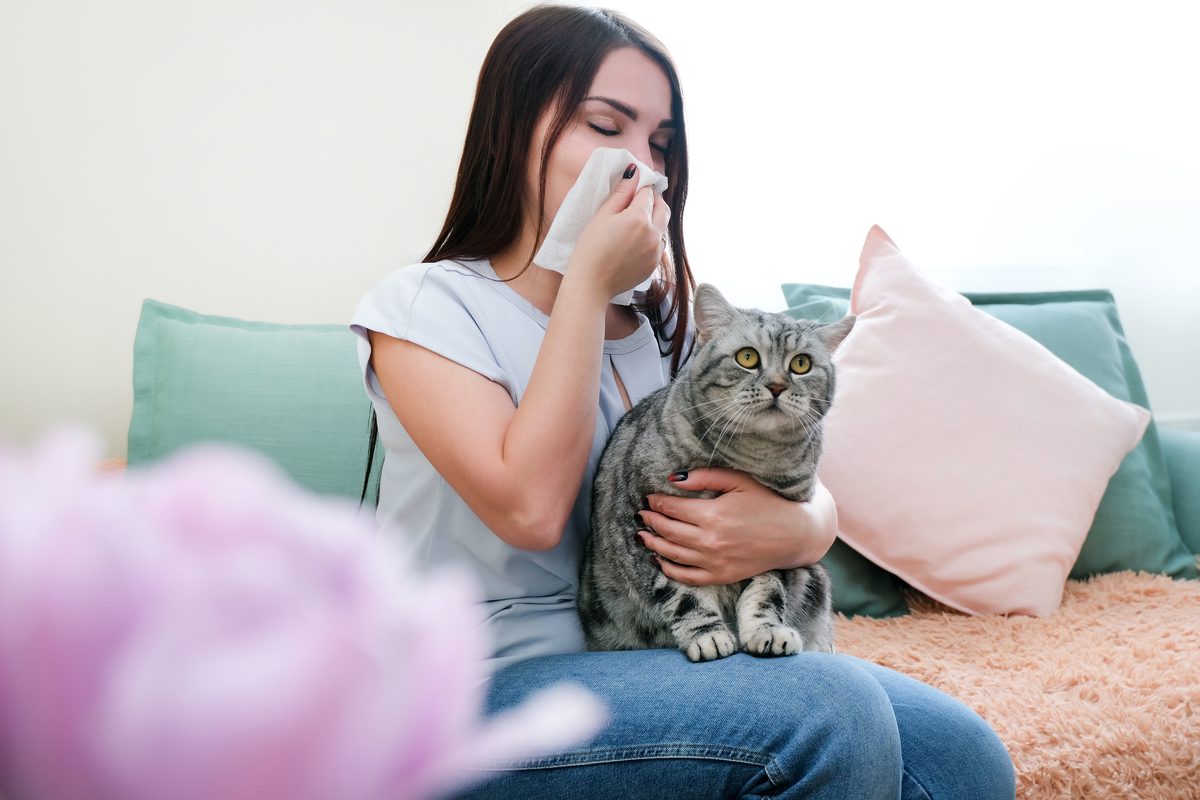
Proteins from skin, saliva & fur from cats, dogs and other pets.
Indoor and outdoor mold, worse in damp, humid environments.
Symptoms we hear about
Overlapping with sinusitis.
Allergy fatigue can compound low energy.
Night congestion can worsen insomnia.
How Chinese medicine sees allergies
In Traditional Chinese Medicine (TCM), the body is pictured as protected by a defensive layer of energy called Wei Qi — think of it as the body's front line, circulating just beneath the skin to guard against wind, pollen, and other outside influences. When that defensive layer is strong, the surface holds steady; when it runs low — often tied to what TCM calls the Lung and Spleen systems, and the Kidney in long-standing cases — the body tends to overreact to triggers it could otherwise shrug off, and the nose and eyes take the brunt. In Chinese medicine, naming an organ this way refers to its energy and function within the body's system — not the physical organ itself. A weak "Lung" in this sense points to the body's surface defenses, not a problem in your actual lungs. Acupuncture aims to support that defensive layer and settle the overreaction. It's a helpful way to picture the pattern — not a medical diagnosis, and not a promise of results.
The gut–immune connection
Here's a link that bridges old and new thinking. In TCM, much of your defensive Wei Qi is considered to be generated by the Spleen system as it transforms food — so in this view, steady digestion and a resilient surface defense go hand in hand. (As before, "Spleen" here means a functional energy system, not the physical organ.)
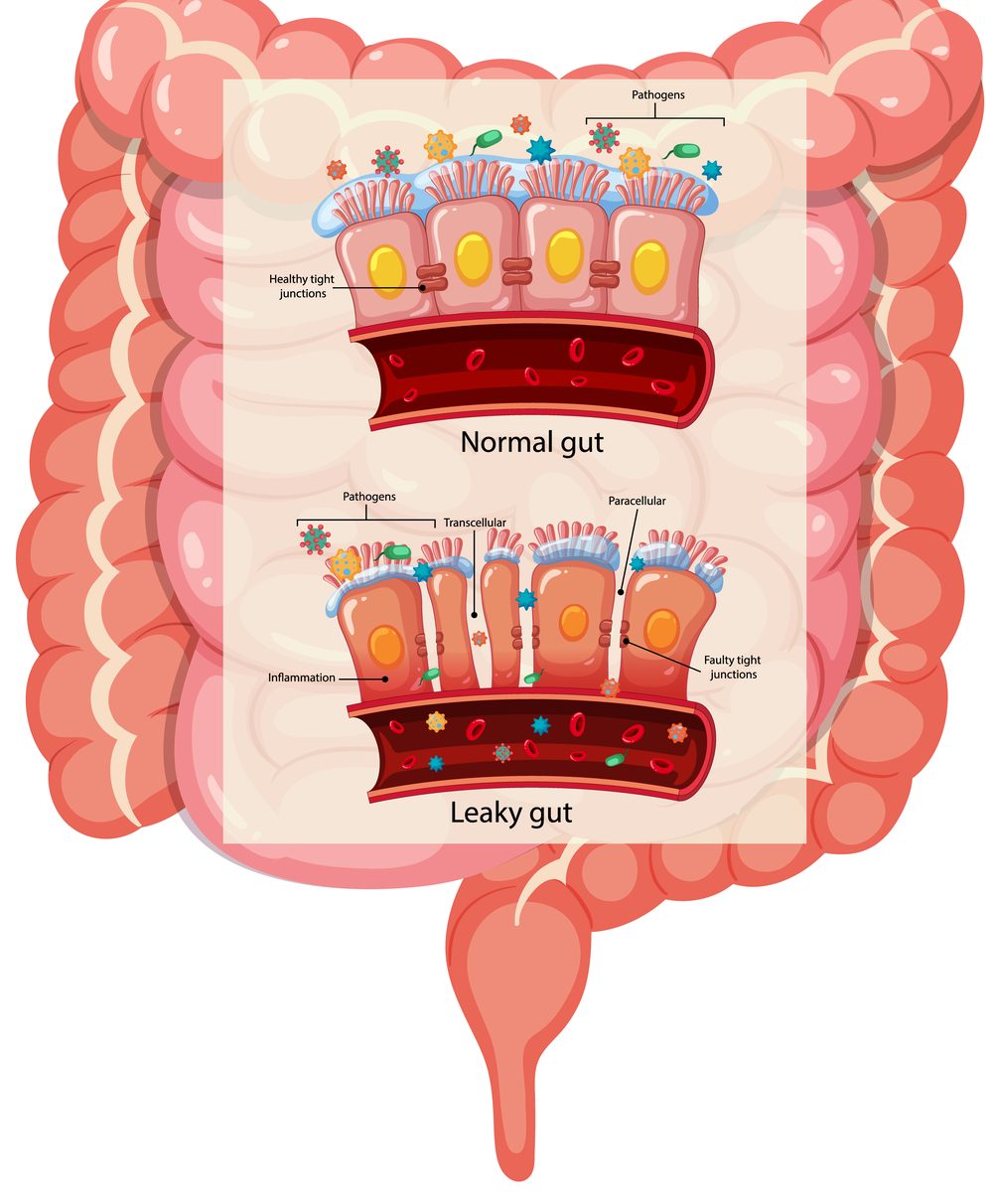
Modern researchers are exploring a related idea: the gut–immune connection, including a debated concept sometimes called increased intestinal permeability, or "leaky gut," in which the gut lining is thought to let particles through more easily and keep the immune system on alert. This is an emerging idea rather than a settled medical diagnosis. The practical takeaway for us is simple: supporting digestion can be part of a whole-body approach to allergies — which is also why some patients dealing with IBS explore acupuncture alongside their allergy care.
How acupuncture may help
Acupuncture is a complement to your medical care, not a replacement, and we never promise a specific result — we begin by seeing how your body responds. That said, in more than 20 years of clinical practice I have seen many patients find meaningful relief from their allergy symptoms over a course of care. The points below are proposed ways acupuncture may help; the research is still developing, and individual results may vary.
| What we aim to support | How it may help |
|---|---|
| Immune & inflammatory response | Research suggests acupuncture may help modulate inflammatory signaling and the histamine-driven reactivity behind allergy symptoms (proposed; not fully established in humans). |
| Nasal airflow & drainage | Carefully selected points, chosen for your individual pattern, may help ease congestion and pressure. |
| Stress & the nervous system | Calming an overactive stress response may reduce the load that worsens flare-ups — see stress & anxiety. |
| Sleep & energy | Easing night-time congestion may support better sleep and less daytime fatigue — see insomnia and chronic fatigue. |
| The gut–immune connection | Because much of the immune system lives in the gut, some patients dealing with IBS explore acupuncture for overall balance alongside allergy care. |
What the research says
- ACUSAR trial: Brinkhaus et al. (Annals of Internal Medicine, 2013) randomized 422 people with seasonal allergic rhinitis. Those who added acupuncture to antihistamines reported statistically significant improvements in allergy-related quality of life and used less rescue medication than those on medication or sham acupuncture alone. The effect was modest and sham also improved — encouraging, not definitive.
- Systematic review: Feng et al. (American Journal of Rhinology & Allergy, 2015) reviewed 13 RCTs and concluded acupuncture is a reasonably safe option that may improve nasal symptoms and quality of life, while noting variable study quality.
- Clinical practice guideline: Seidman et al. (Otolaryngology–Head and Neck Surgery, 2015) lists acupuncture as an option clinicians may offer patients who prefer a non-pharmacologic approach for allergic rhinitis. Individual results may vary.
Our approach & what to expect
Our approach focuses on strengthening the body and building your resilience, so it copes better with your triggers — whether they flare with the seasons or stay with you all year, as with dust or pet allergies. You can begin whenever suits you. Treatment is gentle — manual needling only. Points are selected across the whole body to fit your individual pattern and diagnosis, drawing on a combination of approaches — Master Tung's acupuncture, the Balance Method, and classical TCM — and, when congestion is prominent, cupping or gua sha.
Your treatment plan is built around your particular pattern and how you respond. Most people start at about twice weekly and gradually space sessions out as things improve, easing toward a maintenance rhythm. Individual results may vary.
Anaphylaxis is a medical emergency. If you have trouble breathing, throat tightness, swelling of the lips or tongue, widespread hives, dizziness, or fainting after an exposure, call 911 and use prescribed epinephrine. Food allergies and severe reactions should be managed by an allergist. Also see your doctor for symptoms that don't improve, signs of a sinus infection, or asthma. Acupuncture complements that care — it doesn't replace it.