
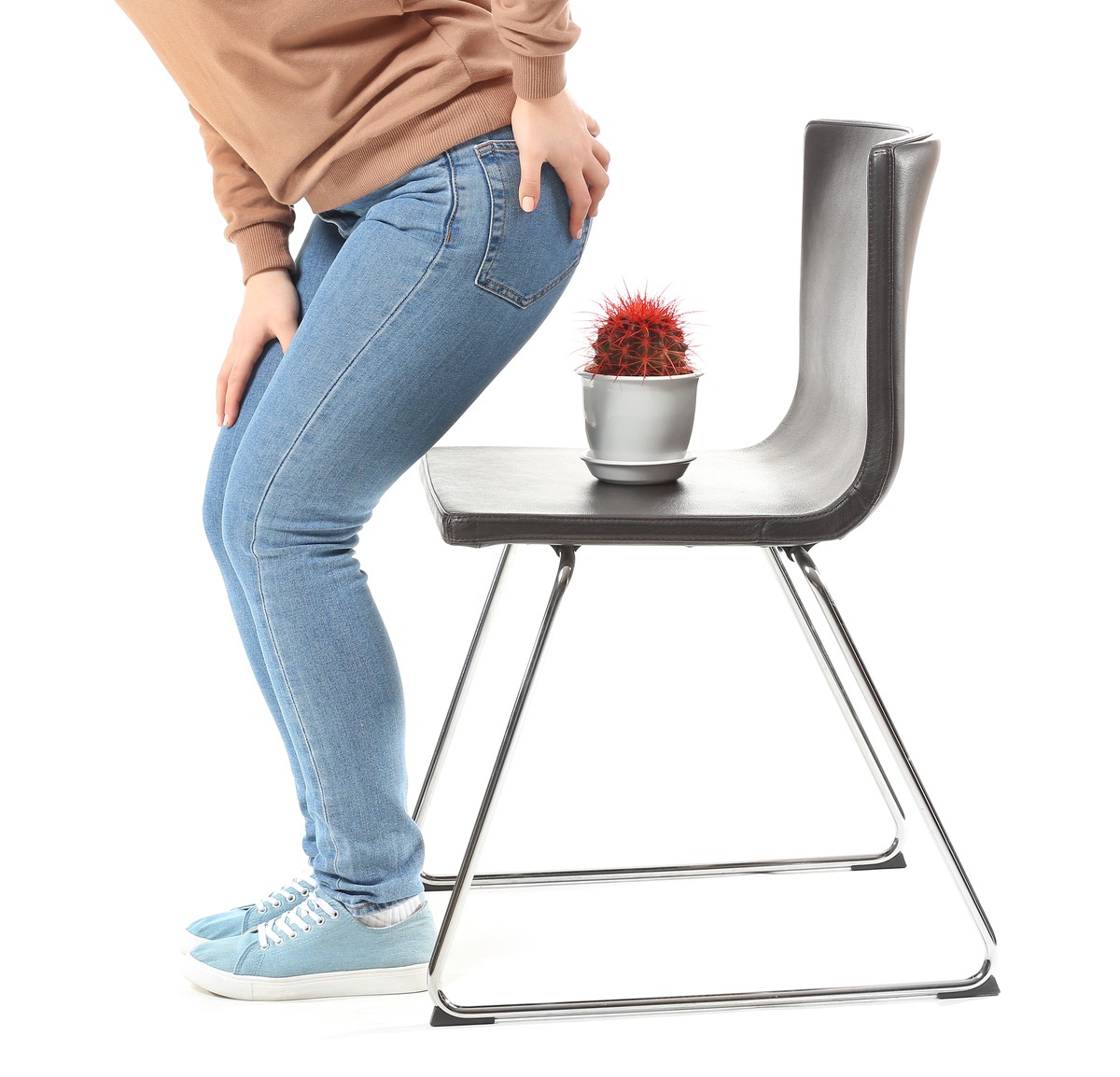
Acupuncture for Hemorrhoids
Hemorrhoids are one of the most common — and least discussed — health complaints. Acupuncture offers a discreet, gentle, drug-free approach that may help ease pain, itching, and swelling while addressing the digestive and circulatory patterns behind flare-ups. Individual results may vary.
Hemorrhoids are one of the most common health complaints in the United States — and one of the least discussed. Millions of people quietly manage pain, itching, swelling, and discomfort that affect sitting, exercise, sleep, and daily life, often cycling through creams and suppositories that soothe symptoms without changing why flare-ups keep returning. Acupuncture offers a discreet, drug-free approach that may help ease the discomfort of hemorrhoids while addressing the digestive and circulatory patterns behind them.
Important: Rectal bleeding should always be evaluated by a physician before it is attributed to hemorrhoids — it can also signal conditions that need prompt medical attention. Acupuncture is a complementary therapy; it supports your medical care and never replaces diagnosis.
A discreet treatment — what that actually means
Let's address the concern that keeps most people from asking about this: acupuncture for hemorrhoids does not involve treatment of the affected area. Needling is performed through distal points — on the arms, legs, abdomen, and scalp — that influence the digestive system and lower-body circulation through the meridian network. You remain dressed apart from rolled-up sleeves and trouser legs, just as you would for a back pain session. The consultation is a conversation, not an examination.
How Chinese medicine understands hemorrhoids
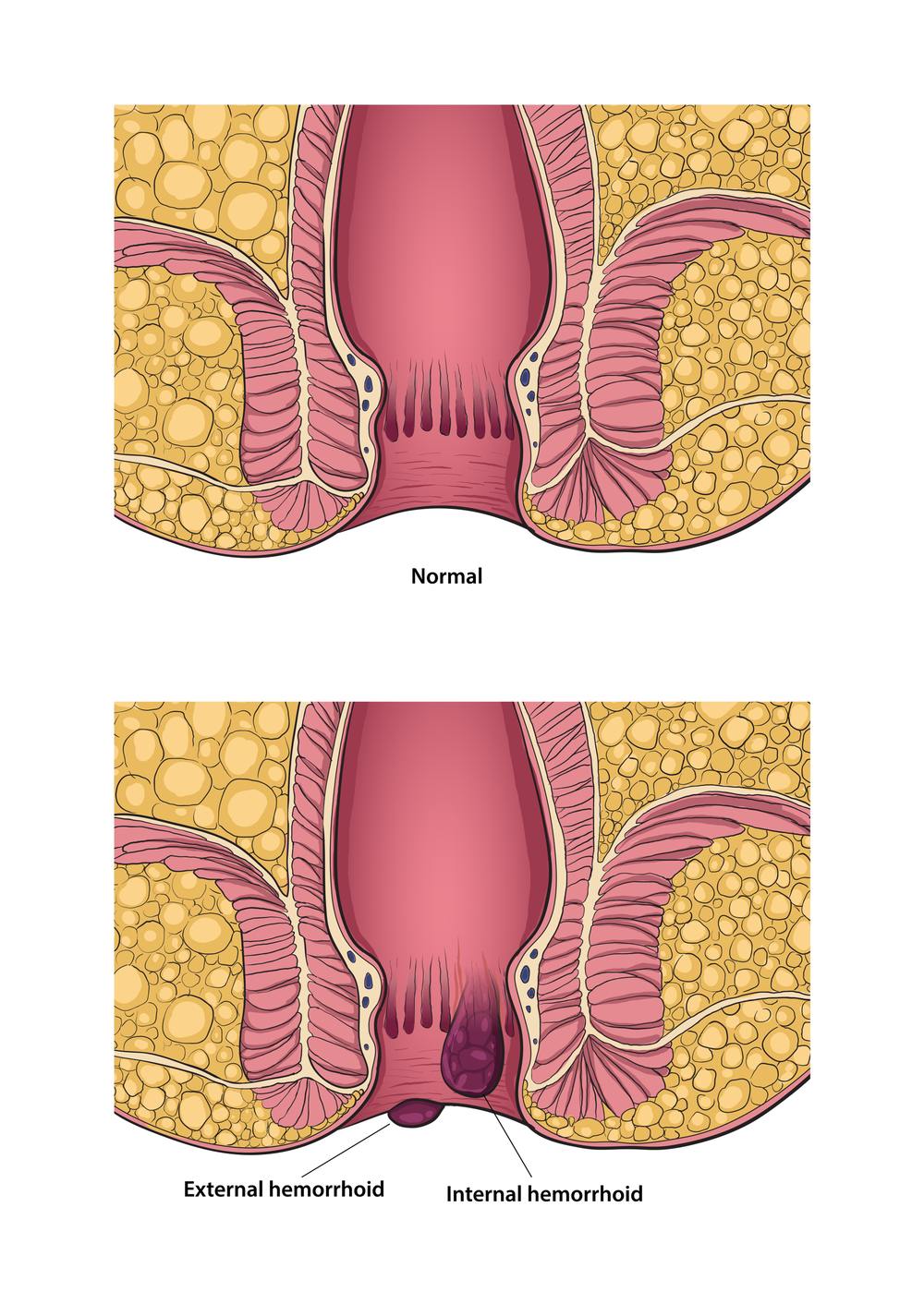
In Traditional Chinese Medicine, hemorrhoids are rarely seen as a local problem. The most common underlying patterns are sinking Spleen Qi — a weakness of the body's "lifting" function that allows tissue to sag and prolapse, often accompanied by fatigue and a heavy sensation; blood stasis — congestion of circulation in the lower body, producing the swollen, sometimes painful vessels themselves; and damp-heat — a pattern of inflammation with burning, itching, and irritation, frequently aggravated by spicy food and alcohol. Chronic constipation and habitual straining feed all three patterns, which is why hemorrhoids and constipation are almost always treated together.
The four grades — and where conservative care fits
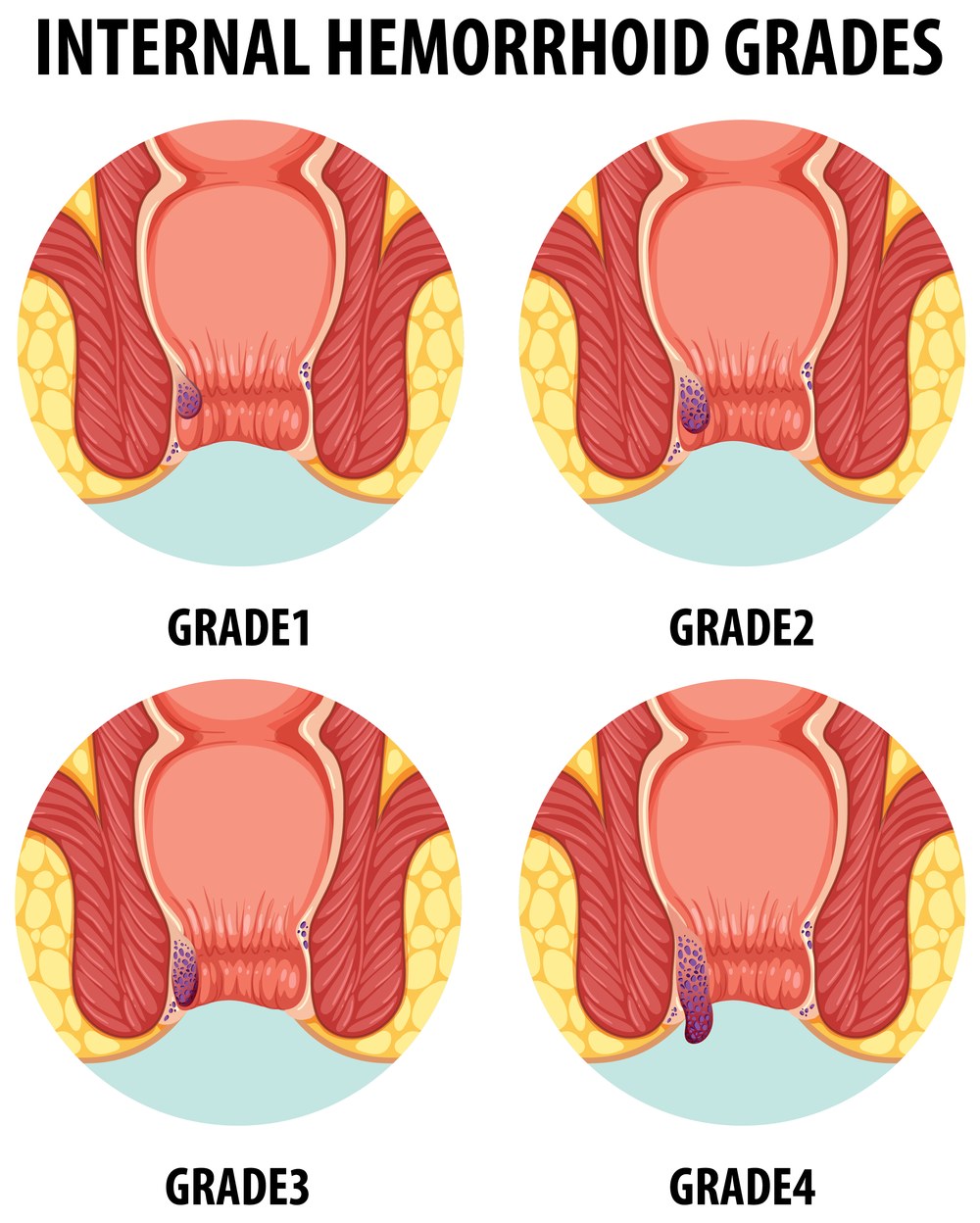
Physicians classify internal hemorrhoids in four grades: Grade 1 — enlarged cushions that may bleed but do not protrude; Grade 2 — protrude with straining and retract on their own; Grade 3 — protrude and need to be pushed back manually; Grade 4 — permanently prolapsed. The grade matters because it defines the realistic goal of care. Conservative approaches — including acupuncture, dietary change, and habit correction — are most relevant for grades 1–2, where easing congestion and eliminating straining can genuinely change the course of the condition. Grades 3–4 belong first in a physician's hands to discuss procedural options; acupuncture can still play a supporting role around that care, particularly for bowel regularity and comfort. Individual results may vary.
Our four-method approach
Traditional Chinese Medicine (TCM) identifies your specific pattern — lifting sinking Qi, moving stagnant blood, or clearing damp-heat — and selects points accordingly, often including the classical scalp and forearm points long used for this condition.
Master Tung's Acupuncture (an advanced acupuncture system) contributes some of the best-known distal points for hemorrhoids in the entire system, located on the forearm — one of the reasons treatment stays completely discreet.
Auricular acupuncture uses ear reflex points corresponding to the rectum and large intestine, and seeds can extend gentle stimulation between sessions.
Dr. Tan's Balance Method (an advanced acupuncture method) supports bowel regularity and lower-body circulation through mirroring points, pairing naturally with the other systems.
Adjunct support: Chinese herbal formulas have a long tradition for this condition and may be recommended alongside needling, together with practical guidance on fiber, hydration, and toilet habits — the unglamorous fundamentals that prevent recurrence.
The four grades of hemorrhoids — and where conservative care fits
Physicians grade internal hemorrhoids from 1 to 4: grade 1 bulges slightly but stays internal; grade 2 prolapses with straining and returns on its own; grade 3 prolapses and needs to be pushed back; grade 4 remains prolapsed. The grade matters because it determines the sensible treatment path. Grades 1–2 — the majority of cases — are exactly where conservative care lives: fiber, hydration, toilet habits, treating the underlying constipation, and acupuncture support for circulation and bowel regularity. Grades 3–4 belong with your physician first; acupuncture may still play a supporting role alongside medical treatment, particularly for the constipation and straining that drive recurrence. Individual results may vary.
What the research says
Research on acupuncture specifically for hemorrhoids is still developing: studies exist, including trials on post-operative hemorrhoid pain, but they are fewer and smaller than the robust evidence base for related applications. What is better established is directly relevant here: the evidence for acupuncture for constipation and bowel regularity — the primary driver of hemorrhoid flare-ups — is backed by multiple randomized trials and systematic reviews, and its role in pain management generally is among the best-researched areas of the field. We share this honestly rather than overstating: for many patients the practical value lies in easing discomfort and breaking the constipation–straining–flare-up cycle. Individual results may vary.
In Ronen's two decades of clinical practice, patients with hemorrhoids have often reported that bleeding episodes ease and swollen tissue gradually settles over a course of treatment — clinical observations consistent with the technique's focus on circulation and bowel regularity, though they are not a guarantee of results. And to repeat the essential caution: rectal bleeding should always be evaluated by a physician first.
Alongside the research, two decades of clinical experience count for something too: in Ronen's practice, patients treated for hemorrhoids have often reported that swelling settles and bleeding episodes become less frequent as bowel habits normalize and local congestion resolves — always after any rectal bleeding has first been evaluated by a physician. Clinical observations are not a guarantee, but they are consistent with how the treatment is designed to work.
Direct randomized trials on acupuncture specifically for hemorrhoids are limited — this is a condition where the evidence base is thinner than for pain or nausea, and honesty about that matters. What exists is a combination of small controlled studies, clinical series, and well-established evidence for acupuncture's effects on the underlying mechanisms (bowel motility, inflammation, pelvic blood flow) that drive hemorrhoid formation and flare-ups.
- Acupuncture and constipation — the upstream connection: A systematic review and meta-analysis in Evidence-Based Complementary and Alternative Medicine (Liu et al., 2017) found electroacupuncture significantly improved spontaneous bowel movement frequency and stool consistency in chronic constipation — directly addressing the primary driver of hemorrhoid worsening.
- Anorectal blood flow and pelvic circulation: Research on acupuncture's vascular effects shows it can modulate local microcirculation and reduce venous congestion — the pathophysiological basis of hemorrhoid formation. While studies specific to the anorectal vasculature are limited, pelvic circulation research supports plausibility.
- Anti-inflammatory effects: Multiple studies have documented acupuncture's ability to reduce pro-inflammatory cytokines (TNF-α, IL-6) systemically, which is relevant to the local inflammation that sustains hemorrhoid symptoms. A 2016 review in Acupuncture in Medicine summarized these mechanisms across gastrointestinal conditions.
- Clinical series: A small Chinese clinical study (Chen & Liu, 2012) found that acupuncture at DU1 (Changqiang) and BL57 (Chengshan) combined with dietary guidance produced symptom reduction in 78% of grade 1–2 internal hemorrhoid patients over 8 sessions. This is a preliminary finding, not a large RCT, and should be interpreted accordingly.
The evidence for acupuncture in hemorrhoids is preliminary. Rectal bleeding always requires medical evaluation before any complementary care is started. Acupuncture is a complementary therapy — it does not replace surgical or procedural treatment for advanced hemorrhoids. Individual results may vary.
What to expect
Initial consultation: A conversation about your symptoms, bowel habits, diet, activity, and history — plus tongue and pulse assessment, the traditional diagnostics that reveal your underlying pattern. Bring any diagnosis or guidance from your physician so care can be coordinated, particularly if procedures have been discussed.
Sessions: Needles are retained for 40–45 minutes while you rest, fully clothed. Treatment is typically recommended twice weekly; acute flare-ups often respond within 4–6 sessions, while chronic or recurring cases may benefit from a longer series. Dietary and lifestyle adjustments are part of the plan from day one, because they are what keep results.
Related conditions & services
Sources: National Institute of Diabetes and Digestive and Kidney Diseases (NIDDK) — prevalence of hemorrhoids in the United States. Research on acupuncture for bowel function and constipation: see the studies cited on our constipation page.
Disclaimer: This page is for educational purposes only. Acupuncture may help ease hemorrhoid symptoms for some patients, but individual results vary and are not guaranteed. Rectal bleeding requires medical evaluation. Always consult your physician before beginning any new treatment. Acupuncture is a complementary therapy and does not replace conventional medical care. Acupuncture needles are FDA-regulated Class II medical devices.